





Un luogo silente
From 05/02/2026 To 06/03/2026
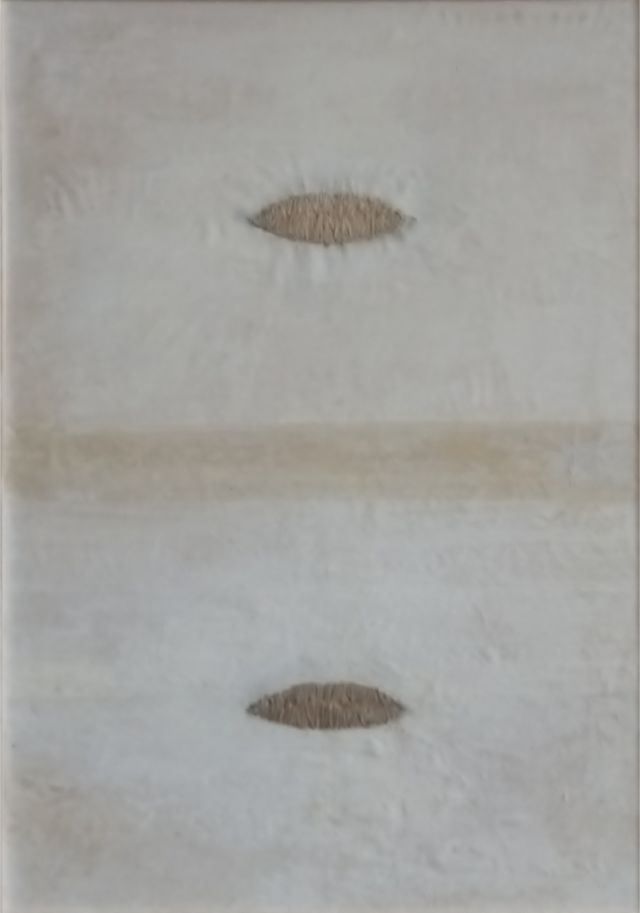
Galleria Raffaella De Chirico is pleased to present, in conjunction with the Milano Cortina 2026 Winter Olympic and Paralympic Games, a solo exhibition by artist Antonella Plenzio (1953) titled Un luogo silente. The exhibition will open to the public on February 5, 2026, by appointment, while the official inauguration will be held on February 11, a symbolic date that also celebrates the 15th anniversary of the gallery, which first opened in Turin in 2011. This initiative is part of the Milano Cortina 2026 Cultural Olympiad, a multidisciplinary, plural, and widespread program designed to promote Olympic values across Italy through culture, heritage, and sport, leading up to the Winter Olympic and Paralympic Games hosted by Italy from February 6 to 22 and March 6 to 15, 2026, respectively. The exhibition transforms the entire gallery space into an immersive installation dedicated to the "Bocche" (Mouths) series: a body of 36 works investigating the thin boundary between deniedinteriority and the urgency of expression. The works on display were created by the artist between 2012 and 2013, using cotton thread to sew sealed female mouths onto oilcloth, later enhanced with acrylic, white lead, and oil pastel. The arrangement of the 36 pieces creates a tight dialogue with the viewer, where the repetition of the subject becomes a mute choir capable of giving voice to what usually remains unheard. The decision to fully occupy the space and make it strictly adherent
to the concept is intentional. In this exhibition, Antonella Plenzio brings her extensive experience
as a set designer at the Teatro alla Scala. Plenzio's "sewn mouths" are not symbols of defeat; they represent the critical moment of the threshold. It is on this marginal line that the pain of an unspoken word, the melancholy of a mute sound, and the feeling of a restrained interiority demand to be finally perceived.
As the artist states: "Two mouths separated by a barely traced boundary; on this marginal line, a single voice becomes expression. On this threshold of an interiority that gives life to a condition one would wish to deny, the melancholy of a mute sound and the feeling of an unspoken word thus become the real possibility of being perceived as such."